
By Mlungisi Shabalala, 03 November 2026
uMngeni-uThukela Water continues to closely monitor the ongoing El Niño cycle. Based on the latest oceanic and climatic conditions across the central and eastern Pacific Ocean, the ongoing El Niño is already in the ‘very strong’ category and continues to strengthen. The latest probabilistic model assessment by the International Research Institute for Climate and Society (19th October 2026) suggests that there is strong likelihood (100%) for the El Niño Southern Oscillation (ENSO) to remain an El Niño state throughout the summer season. In Southern Africa, El Niño is often associated with dry and hot conditions. Therefore, the latest status and climate projections necessitate the need to closely monitor local weather conditions, as well as the state of water resources.
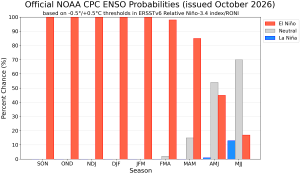
Figure 1: Latest ENSO predictions. Source: CPC.
Current water resource Status in uMngeni-uThukela Water’s (UUW) operational area
The tail end of the 2025/26 hydrological year saw a series of cold fronts which provided much-needed relief for water resources in the country. uMngeni-uThukela Water’s area of operation, in particular, benefited from two cut-off low pressure systems, i.e. early August and mid-September. Due to these two weather systems, KwaZulu-Natal received above-average rainfall during August and September, resulting in the recharge of the small storage systems which are mostly concentrated in the south coast area (except the Amanzanyama Dam in Harding which remains 35% of full supply level). However, the impact of these two events was insignificant to the larger systems, which underscores the cumulative impacts of the ongoing El Niño event.
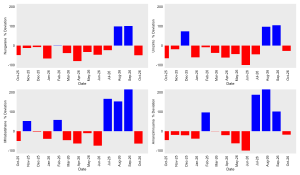
Figure 2: South Coast rainfall deviation from long-term averages (Oct 2025 to Oct 2026).
October, which marks the onset of the new hydrological year (i.e. Oct to Sep), has seen below-average rainfall throughout KwaZulu-Natal. This is concerning, particularly for the larger dams which supply major cities in the province, e.g. dams in the uMngeni System. These dams are already stressed due to the current demand, which exceeds the available yield of the system. Thus, poor recharge, as well as the projected impacts of El Niño, poses a sustainability risk.
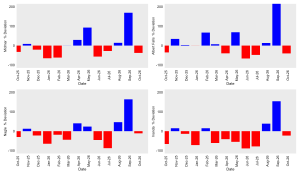
Figure 3: uMngeni System rainfall deviation from long-term averages (Oct 2025 to Oct 2026).
The table below shows the difference in the dam storage levels for the uMngeni System dams at the beginning of the 2025/26 and 2026/27 hydrological years. The current storage level of most dams is lower than compared to the same time in 2025. This is mainly due to the cumulative effect of the successive below-average rainfall months during the 2025/26 hydrological year. Only the Inanda Dam remains at a high storage level, due to pumping-related challenges.
Table 1: Comparison of change in South Coast Dam levels between May and August 2025 vs 2026.
| Dam Level (%) | ||
| Site Name | 01 November 2026 (%) | 01 November 2025 (%) |
| Mooi-uMngeni System | ||
| Spring Grove Dam | 78 | 72 |
| Mearns Dam | 52 | 86 |
| Midmar Dam | 89 | 94 |
| Albert Falls Dam | 84 | 94 |
| Nagle Dam | 86 | 100 |
| Inanda Dam | 100 | 101 |
The KwaZulu-Natal province received below-average rainfall throughout the 2025/26 hydrological season, and this has resulted in relatively low storage levels in the stressed water supply systems. With El Niño already at a very strong state and bring projected to continue strengthening, a cautious approach is required to ensure the sustainability of our already-stressed water resources. As we step into the rainfall season, monitoring the state of El Niño becomes more important, as prolonged El Niño conditions may lead to drought. Water users are urged to actively participate in the conservation of water through actions such as fixing household leaks, reusing water for non-potable use and reporting leaks in the reticulation network. uMngeni-uThukela Water will continue to monitor the ongoing El Niño and the next update will be published in December.